by National Competitiveness and Productivity Council
IT WAS NOTED THAT TRAFFIC COLLISIONS CARRY FAR REACHING CONSEQUENCES BEYONG THE IMMEDIATE DAMAGE TO VEHICLES AND PROPERTY
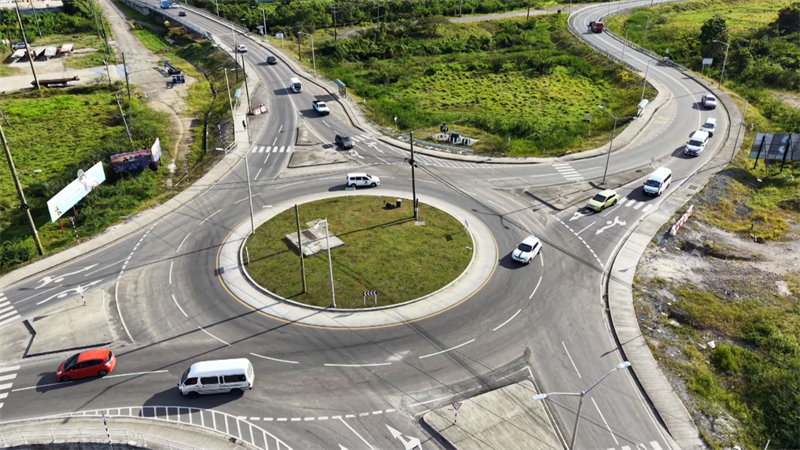 The National Competitiveness and Productivity Council (NCPC) is calling for comprehensive reforms to road safety and traffic management, emphasizing that road accidents are not only a transportation or law enforcement issue but also a significant barrier to national productivity, economic competitiveness, and sustainable development.
The call was made by NCPC Director Lisa Florent-Montoute during a special assembly of the Royal Saint Lucia Police Force (RSLPF) held at the Royalton Saint Lucia Conference Centre. The meeting was attended by Prime Minister and Minister for National Security, Hon. Philip J. Pierre, Police Commissioner Verne Garde, members of the Force’s senior leadership, and approximately 400 police officers.
Addressing the gathering, Florent-Montoute underscored the direct relationship between road safety and economic performance, noting that traffic collisions carry far-reaching consequences beyond the immediate damage to vehicles and property.
“Road safety is often viewed solely as a transportation or law enforcement issue. However, it is much broader than that. It is a national productivity issue,” she stated.
According to the NCPC Director, road traffic accidents result in lost work hours, employee absenteeism, increased medical costs, insurance claims, traffic congestion, infrastructure damage, and, most tragically, the loss of lives and livelihoods.
She highlighted the growing pressure on the country’s road network, noting that Saint Lucia now has more than 95,000 registered vehicles serving a population of approximately 180,000 people. In 2023, the island recorded nearly 3,000 motor vehicle accidents, including more than 350 major collisions.
“The impact on productivity cannot be overstated,” Florent-Montoute said. “When roads become congested due to accidents, employees arrive late to work, goods and services are delayed, businesses incur additional costs, and valuable productive hours are lost. Road accidents therefore affect not only the individuals involved but the entire economy of Saint Lucia.”
Recognizing the Royal Saint Lucia Police Force as a critical partner in improving national productivity, the NCPC is advocating stronger collaboration among key stakeholders to enhance road safety, improve traffic management, and reduce congestion across the island.
One of the Council’s principal recommendations is a review and modernization of the Motor Vehicle and Road Traffic Act, particularly the procedures governing the handling of minor traffic accidents.
Florent-Montoute noted that many jurisdictions have adopted streamlined approaches that allow motorists involved in minor collisions to safely exchange information, submit digital reports, and clear roadways more quickly. Such reforms, she explained, enable police officers to devote more time to priority public safety responsibilities while minimizing unnecessary traffic delays.
“Such reforms can reduce congestion, improve efficiency, and minimize the productivity losses associated with prolonged accident processing,” she said. “The NCPC stands ready to support discussions and take action on modernizing these processes through stakeholder engagement and policy dialogue.”
The Council is also proposing the establishment of a multi-agency Road Safety and Traffic Management Collaborative comprising representatives from the Royal Saint Lucia Police Force, the Ministry of Infrastructure, the Road Transport Board, the Insurance Council of Saint Lucia, the Judiciary, emergency services, and the National Competitiveness and Productivity Council.
The proposed body would examine traffic management challenges, review existing legislation, identify operational bottlenecks, analyse accident trends, recommend policy reforms, and develop innovative solutions to improve road safety while increasing national productivity.
“The purpose of this collaborative body would be to examine traffic management challenges, review legislation, identify bottlenecks, assess accident trends, recommend policy reforms, and develop innovative solutions aimed at reducing congestion, improving road safety, and increasing national productivity,” Florent-Montoute said. “As we look towards the future, let us recognize that every minute saved on our roads, every accident prevented, and every life protected contributes to a stronger and more productive nation.”
The NCPC reaffirmed its commitment to working alongside the Royal Saint Lucia Police Force and other public and private sector stakeholders to modernize traffic management systems, strengthen road safety policies, and develop practical, long-term solutions that will benefit road users, businesses, and the wider economy.
Real Estate