Tuesday, June 30, 2026
THE RISK TO THE CARIBBEAN IS ASSESSED BY THE CARIBBEAN PUBLIC HEALTH AGENCY AS LOW. HOWEVER, GIVEN THE REGION’S HIGH CONNECTIVITY THROUGH INTERNATIONAL TRAVEL INTO THE CARIBBEAN REGION, STRENGTHENING OF NATIONAL SURVEILLANCE SYSTEMS IS IMPORTANT
On May 17, 2026, the World Health Organization (WHO) declared the ongoing Ebola Virus Disease (EVD) outbreak affecting the Democratic Republic of Congo (DRC) and Uganda, a Public Health Emergency of international Concern (PHEIC) under the International Health Regulations (2005). The declaration of a PHEIC underscores the need for heightened international and regional vigilance and coordination especially given the current situation in conflict- affected regions with limited access to healthcare services. Although at present, this event is not classified as a pandemic, coordinated international action is required.
On June 23, 2026 the Democratic Republic of the Congo’s Ministry of Health reported a cumulative total of 1,094 confirmed Ebola Virus Disease cases, including 277 confirmed deaths, and 387 individuals hospitalized in isolation as of June 22, 2026. This represents an increase of 46 confirmed cases and 10 deaths since the previous update was published. As of June 24, 2026, Uganda had reported a total of 20 confirmed Ebola Virus Disease cases, including two deaths.
On June 24, 2026 the French Ministry of Health reported one confirmed case of Ebola Virus Disease in France. Previously, only one other confirmed case outside the affected region had been reported: that is on May 19, 2026 a United States of America citizen who was medically evacuated to Germany for treatment. Both cases were imported from areas affected by the ongoing outbreak in the Democratic Republic of the Congo.
Health authorities in both countries: Democratic Republic of the Congo and Uganda are supported by WHO and partners, and continue to implement extensive response measures.
The current risk to the Caribbean is still assessed by the Caribbean Public Health Agency (CARPHA) as low. However, given the region’s high connectivity through international travel and direct flights into the Caribbean region, strengthening of national surveillance systems and preparedness is important.
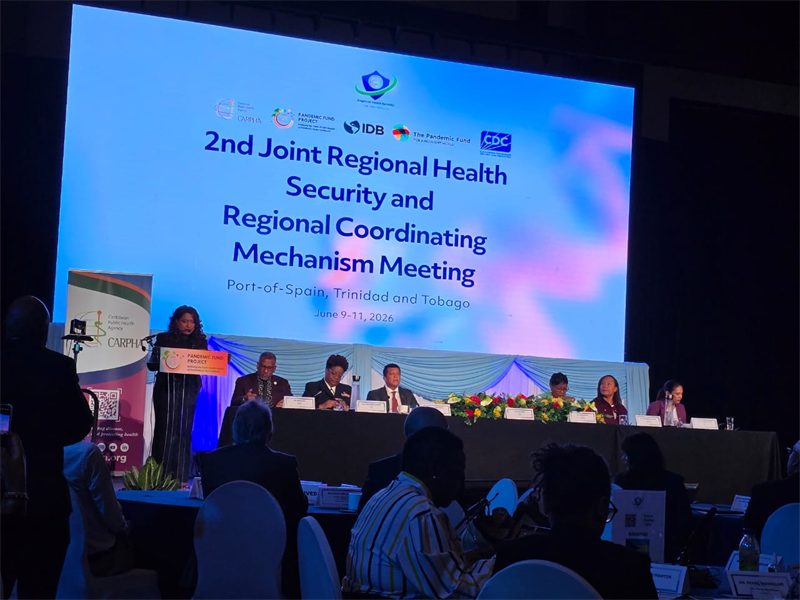
The Chief Medical Officer Dr. Sharon Belmar-George, National Epidemiologist Dr. Michelle Francois and Laboratory Director Dr. Wayne Felicien attended CARPHA’s Joint Regional Health Security and Regional Coordinating Mechanism for Health Security meeting in Trinidad and Tobago from June 9-11, 2026. This meeting served to advance regional coordination and collaboration for Emergency Response and Prevention, Preparedness and Response Surveillance, and Data Sharing. The effective regional health coordination requires a coordinated, collaborative approach among Member States and partners to protect the health of their local and visitor populations and mitigate against health threats such as infectious diseases and pandemics.
The Ministry of Health, Wellness and Nutrition continues to strengthen the National Ebola Plans in collaboration with the hospitals and health stakeholders. Sensitization and training have been held with healthcare workers, the Education, Tourism and Business Sector, Immigration, Customs and Excise and the Saint Lucia Air and Sea Ports Authority (SLASPA).
Interventions continue to strengthen the ports of entry to support timely identification, reporting and management of travellers who may have been exposed to Ebola Virus Disease or travelled from affected countries within the previous 21 days.
The CARPHA Regional Referral Laboratory now has the capacity to test for Ebola Viruses and has coordinated transportation of suspected case specimens on behalf of Member States.
As per travel advisory for Saint Lucia, the public is advised against travel to high risk regions and persons who travel into the country from the defined high-risk regions will be placed on 21 days’ home quarantine. A 15 room Isolation ward and 12 bed management ward has been identified in the event cases are suspected, diagnosed or detected on island.
The Ministry of Health, Wellness and Nutrition is closely monitoring the outbreak and preparing plans for prevention, early detection and management in the country, in consultation with the regional public health agencies.
Real Estate