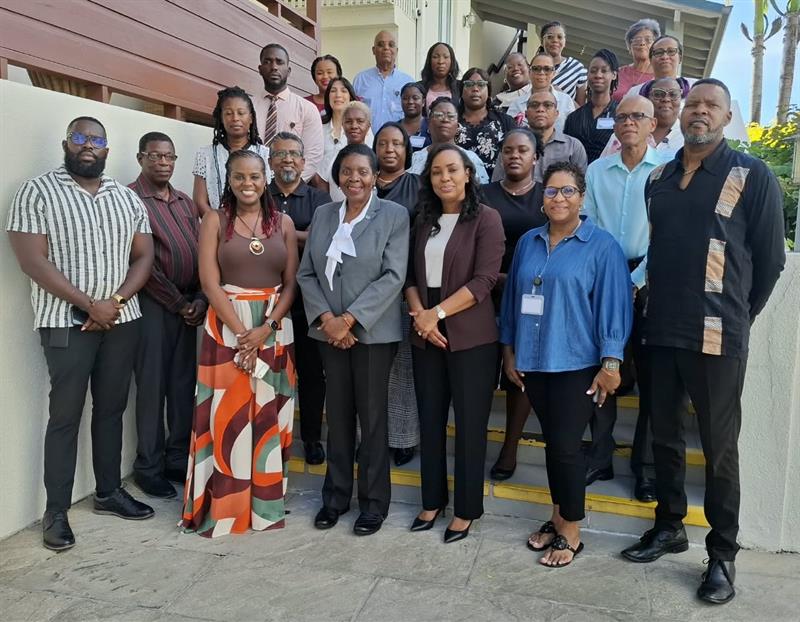
 Saint Lucia is strengthening the framework for delivering and measuring progress on decent work, following the successful completion of a four-day capacity-building exercise that brought Government, employers and workers together to shape the country’s first Decent Work Country Programme (DWCP).
The Decent Work by Design DWCP Capacity Lab, held from October 12 to 15, was organized by the International Labour Organization (ILO) in collaboration with the Government of Saint Lucia. It focused on equipping national stakeholders with the tools and arrangements needed to translate decent work priorities into measurable results, track implementation and hold partners accountable for progress.
Through practical exercises and technical discussions, participants examined how the programme’s objectives can be converted into clear results, supported by appropriate indicators and reliable data. The emphasis was on establishing a system that allows stakeholders to assess what is working, identify gaps and make informed adjustments as implementation advances.
Minister for Labour, the Honourable Emma Hippolyte, underscored the importance of moving beyond plans to measurable outcomes. “A national programme has to be judged by the results it produces, not simply by what was planned. Government, employers and workers need to be able to look at the evidence together, see where progress is being made and decide what needs to change when it is not. That is the kind of shared ownership and accountability we want to strengthen,” added Minister Hippolyte.
A key area of discussion was the potential role of the National Tripartite Advisory Committee (NTAC) in overseeing the programme and supporting continued dialogue among Government, employers and workers.
The discussions build on Saint Lucia’s ratification earlier in 2026 of the ILO’s Tripartite Consultation (International Labour Standards) Convention, 1976 (No. 144), and the establishment of the NTAC to strengthen consultation on labour matters.
The Capacity Lab also created opportunities for regional exchange. Representatives of Suriname’s DWCP Monitoring Commission shared their experience in tripartite monitoring and reporting, while a Haitian tripartite delegation explored Saint Lucia’s experience in establishing the NTAC as Haiti considers ways to strengthen its own national social dialogue arrangements.
The outcomes will help inform the next phase of Saint Lucia’s DWCP process, particularly the development of mechanisms for monitoring, reporting and tripartite oversight. The ILO will continue to provide technical support as Government, employers and workers work towards a programme that connects national priorities with tangible improvements in working conditions and employment opportunities.
For Saint Lucia, the next step is to ensure that the commitment to decent work is supported by clear targets, effective collaboration and a reliable way to measure progress.
Real Estate