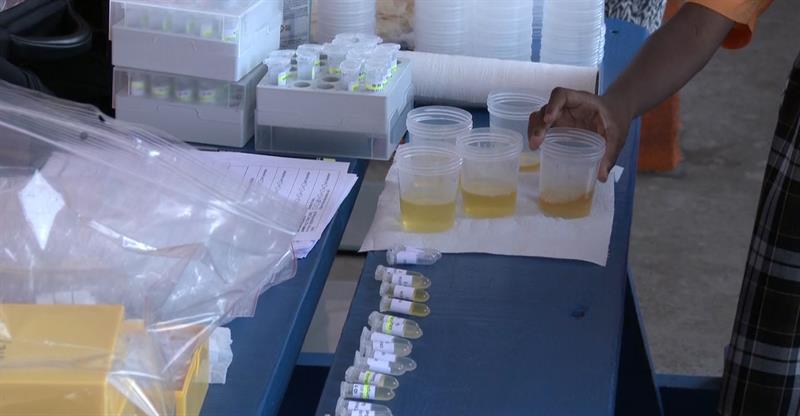
 Saint Lucia is currently the sixth Caribbean country to partake in the regional Caribbean Island Urinary Iodine and Salt Survey (CRUISE).
The study, which involves children aged 6 – 12, focuses primarily on sodium and iodine levels in their urine.
District Medical Officer and NCD Focal Point, Dr. Sharon Cyr-Philbert, said high sodium levels and low iodine levels can lead to many complications especially chronic disease.

“High sodium levels are linked to diseases such as high blood pressure which lead to strokes, and low iodine levels can affect the brain and affect children’s ability to learn. Of course that can be reversed, so we want to improve iodine levels, and lower sodium levels,” she said. “We’re undertaking a very small survey and randomly chose two schools—Carmen Rene and Micoud Primary. In total we hope to get urine samples from 200 children. We have seen over the years that chronic diseases such as high blood pressure and diabetes are the main causes of death in Saint Lucia and the wider world.”
Medicine Professor from Switzerland, Michael Zimmermann, believes it is important to practice proper eating habits from a tender age.
“Food habits are learned early in life, so if a child 6 – 12 years of age is eating a high salt diet that’s something that they will continue to do for the rest of their life, and of course that can lead to high blood pressure and heart disease,” Mr. Zimmermann said. “So the Ministry of Health would like to get an idea of how much salt the children are eating or what are the main sources of salt in order to develop a program to try to reduce salt intake at a young age, to hopefully establish healthy life long habits.”
Meanwhile, Acting Principal of the Carmen Rene Memorial School, Cyiana Norley-George said this study is not only beneficial to the students, but to the communities by extension.
“This research project is an excellent opportunity. We know that iodine helps with the development of the brain, so a project of that nature provides our students with the opportunity to be more informed and when you train or teach a child, you train a community.”
The urine samples will be taken to a lab in Switzerland for testing. The results will be sent to Ministry of Health within two months where the necessary policies and actions will be implemented to address them.
Related Articles

Media Release: Saint Lucia Observes World Consumer Rights Day with Focus on Safe Products and Empowered Consumers

Media Release: The Ministry of Health, Wellness and Nutrition Reestablishes Dental Services at the La Ressource Wellness Centre

Media Release: Pan American Health Organisation (PAHO) Team visits Saint Lucia to Review National Plan for Accelerating the Elimination of Cervical Cancer

Media Release: British Airways Expands Direct Service to Saint Lucia