 School principals and vice-principals across Saint Lucia are being empowered with new tools to better manage school facilities, improve safety, and secure funding for critical infrastructure projects. The initiative forms part of the Government of Saint Lucia’s ongoing efforts to strengthen public asset management and create safer learning environments for students, teachers, and staff.
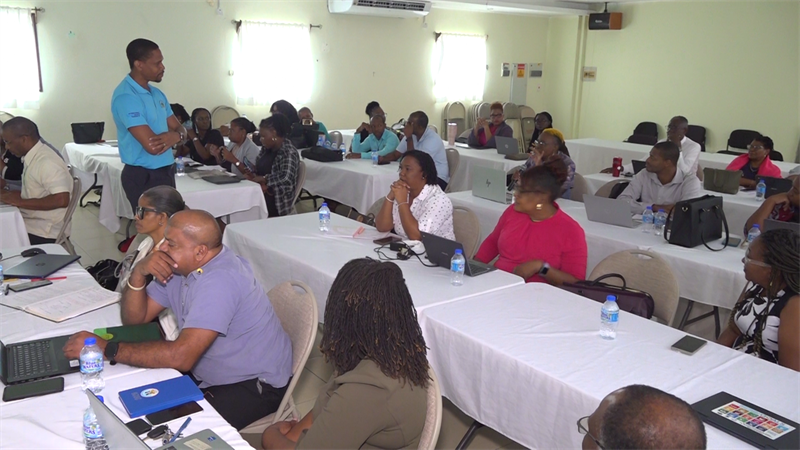
Nearly fifty education stakeholders recently participated in a two-day Capacity Building Workshop on the Public Asset Management Framework for Education Infrastructure held at the Orchid Centre in Union. The workshop brought together principals, vice-principals, education officers, and school safety personnel representing all eight educational districts across the island.
The training was organized by the Ministry of Education, Sustainable Development, Innovation, Science, Technology and Vocational Training in collaboration with the National Integrated Planning and Programme Unit (NIPP) within the Department of Finance, with support from UNICEF.
Civil Engineer with NIPP, Fabian Felix, explained that the workshop was designed to strengthen the capacity of school leaders to effectively manage educational infrastructure while promoting a culture of safety, preventative maintenance, and evidence-based decision-making.
“While a school is often referred to by a name, that school may have about five or six buildings that are individual assets of that school. According to our asset management policy, an asset should be properly managed and have a useful life of over a year,” Felix explained.
He noted that schools represent significant public investments and that principals play a critical role in identifying maintenance issues before they escalate into costly repairs or safety hazards.
“Having school principals on compound, there’s absolutely nothing wrong with giving them the basic knowledge to look out for defects that they can call on the relevant professionals to address, such as stress cracks, failure in foundations, leaks, electrical failures. We have a lot of issues with the building envelope, doors, windows, and of course, the prevailing issue of mold in our facilities,” he added.
The workshop also addressed concerns frequently raised by school administrators regarding the prioritization and funding of maintenance and improvement projects. Participants were introduced to practical tools and processes that can assist schools in documenting infrastructure needs and aligning them with government budgeting and planning mechanisms.
School Safety Officer Major Sean Wells emphasized the importance of empowering school leaders to take an active role in maintaining safe learning environments.
“For us, it is important that they understand and that they participate in this. They will be taking the knowledge gained here back to the schools and district school safety teams, where they can educate their peers and colleagues,” Wells stated.
The training forms part of the Government’s broader efforts to modernize infrastructure management through the implementation of the Public Asset Management Policy and the Public Finance Management Act Asset Management Regulations. Key areas of focus included digital asset management, infrastructure condition assessments, lifecycle planning, disaster resilience, and preventative maintenance strategies.
For many participants, the workshop provided practical knowledge that can be immediately applied within their schools.
Principal of the Piaye Combined School, Eugenie Paul-Mooney, described the training as both timely and transformative.
“I think that this session is very valuable, and I don’t want it just for me or for the few participants here, but for all of our principals at all of our schools. The knowledge that you gain here helps you when you have to look at school safety and your school plant because you need to ensure that your students, staff, and everyone who attends your school is safe as well,” she said.
Paul-Mooney noted that the information gained during the workshop has already given her a new perspective on ongoing construction works at her school and highlighted the importance of ensuring that infrastructure projects are designed and implemented with safety at the forefront.
The workshop represents another step in strengthening Saint Lucia’s education infrastructure and building institutional capacity to safeguard public assets. By equipping school leaders with the knowledge and tools needed to effectively monitor and manage facilities, the Government is fostering safer, more resilient, and more sustainable learning environments for current and future generations.
Real Estate